
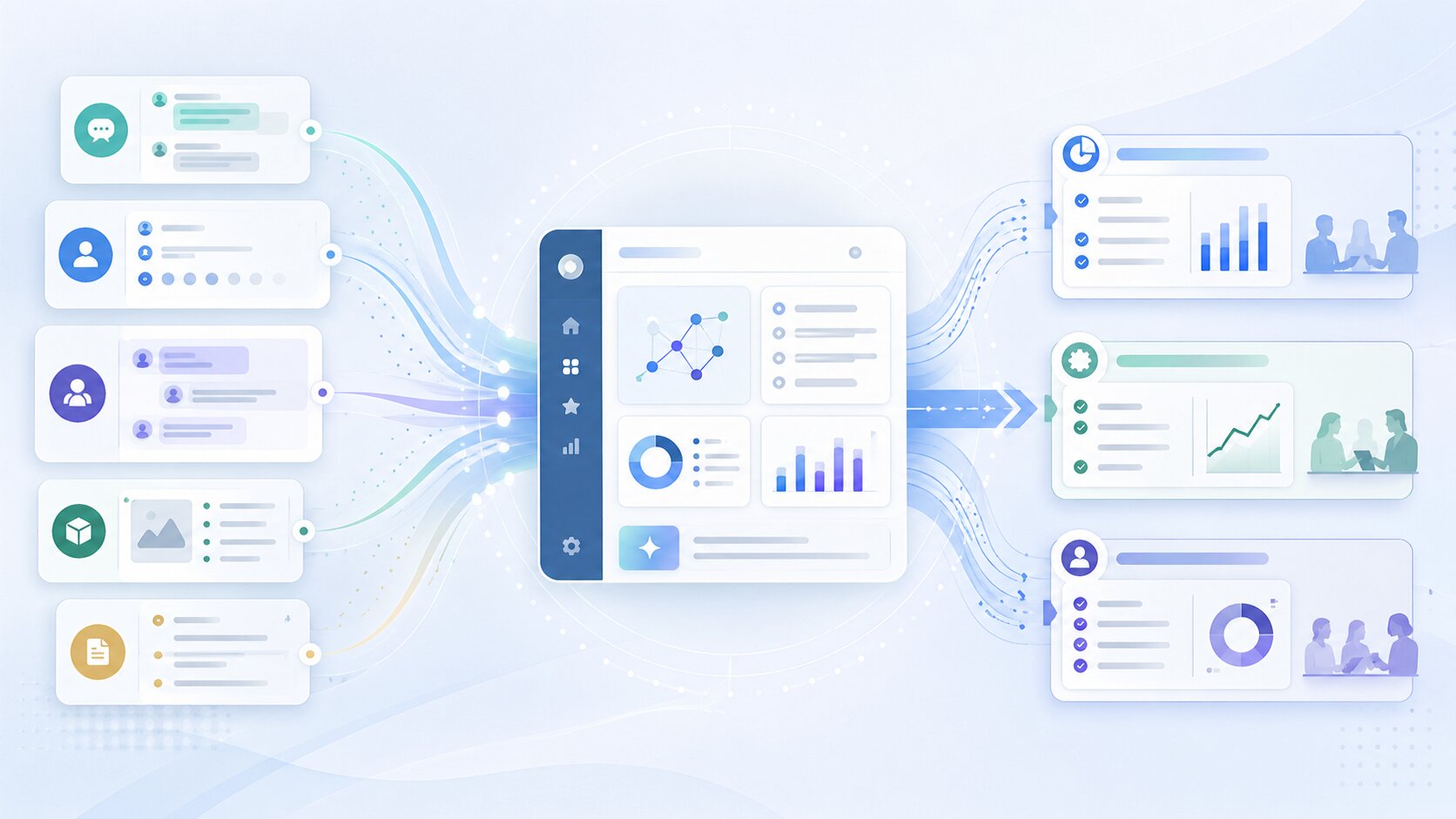
 OpenAI’s newly announced Workspace Agents are aimed at enterprise work, but their relevance may extend into CX operations as well. That said, the CX relevance is indirect for now, but important. These types of agents are unlikely to replace interaction analytics or VoC platforms, but they may help organizations turn the findings from those systems into cross-functional insights.
OpenAI’s Workspace Agents are now available in research preview for ChatGPT Business, Enterprise, and educational plans. OpenAI describes them as Codex-powered agents that can take on more complex knowledge work and keep running in the cloud, while users move on to other tasks. They can be shared across an organization and used with workplace tools such as Slack.
That makes them a step beyond custom GPTs. A custom GPT may help one person work faster, while a Workspace Agent is meant to become a reusable resource for a team.
For CX leaders, the announcement is worth watching because it points to another layer of enterprise work becoming agent-enabled. Most of our attention is focused on customer-facing AI agents and agent assist tools. But some of the most useful early applications may sit behind the scenes, where managers, analysts, supervisors, and product teams are trying to make sense of what customers are already telling them.
How this differs from UiPath
It’s tempting to compare Workspace Agents with platforms such as UiPath. They both use the language of agents and automation. But they start from different places.
UiPath comes from the world of enterprise automation. Its tools are built for companies that want to automate business processes in a controlled way. That might include moving work between systems, routing tasks to people, handling exceptions, or using software robots to complete routine steps.
OpenAI Workspace Agents start from a slightly different place. They begin in the knowledge-worker environment. That’s where people ask questions, review documents, prepare updates, coordinate with colleagues, and make decisions.
For now, the difference could be summarized this way:
UiPath helps enterprises automate governed business processes. OpenAI Workspace Agents help teams turn recurring knowledge work into shared AI workflows.
It may only be a matter of time before this distinction becomes less important.
Implications and examples of workplace agents for CX
Many obvious CX use cases for Workspace Agents are already covered, at least partly, by CCaaS, WEM, VoC, and interaction analytics platforms. Modern contact center platforms can summarize calls. They can analyze sentiment and identify topics and trends. Another core capability of CCaaS is flagging quality issues and surfacing coaching opportunities.
So, a new agentic capability like Workspace Agents doesn’t suddenly give enterprises CX analytics they didn’t have before. The more interesting opportunity sits around what can be done with those analytics, particularly when someone is trying to determine what specific customer interactions mean for the business as a whole.
Answering that broader question usually requires context from outside the contact center platform. Some of it may live in Slack or in systems like Salesforce or Jira. Some may be buried in product release notes, policy documents, customer-success records, or internal planning decks. The problem isn’t always a lack of data. Rather, the issue is that the relevant context is scattered and time-consuming to pull together. A CX-focused Workspace Agent could:
- Help prepare an escalation brief. It might pull together the customer’s support history, account context, open issues, internal discussion, and prior commitments.
- Take a recurring complaint from support interactions and turn it into a product-facing memo. The memo might explain who’s affected, what customers are saying, and whether the issue connects to work already underway.
- Track the impact of a recent policy change. If customers are confused and agents are giving inconsistent answers, the agent could help surface the pattern and draft revised internal guidance.
These examples are less about replacing interaction analytics and more about helping teams act on what those tools reveal.
More tools, more context, better CX decisions
The broader direction of agentic AI is becoming clear. Enterprises are getting more ways to automate complex knowledge work. For CX, that could mean new opportunities to understand what customers are experiencing and how those experiences might be going off track.
A contact center platform may show that a billing issue is creating more calls. But a Workspace Agent could potentially help connect that spike to a product release, an unclear policy, a sales promise, or a broken handoff between teams.
OpenAI’s Workspace Agents are still early. Enterprises will need to think carefully about permissions, governance, accuracy, workflow ownership, and where durable business logic should live. Still, the announcement is another sign that agentic AI is moving beyond individual productivity and into shared operational work.
CX leaders have an opportunity to ask where valuable customer insight still gets trapped between systems, teams, and documents. Shared agents might become one more way to turn that scattered knowledge into better decisions and better customer experiences.
Categories: Articles
 Agentic Commerce Is Starting to Leave a Trail
  Five9’s “Humantic” Bet Is Really a Bet on Conversations
  Who Does Your Personal Agent Work For?
  Salesforce’s Fin Acquisition Expands Its CX Ambitions Beyond Agentforce