
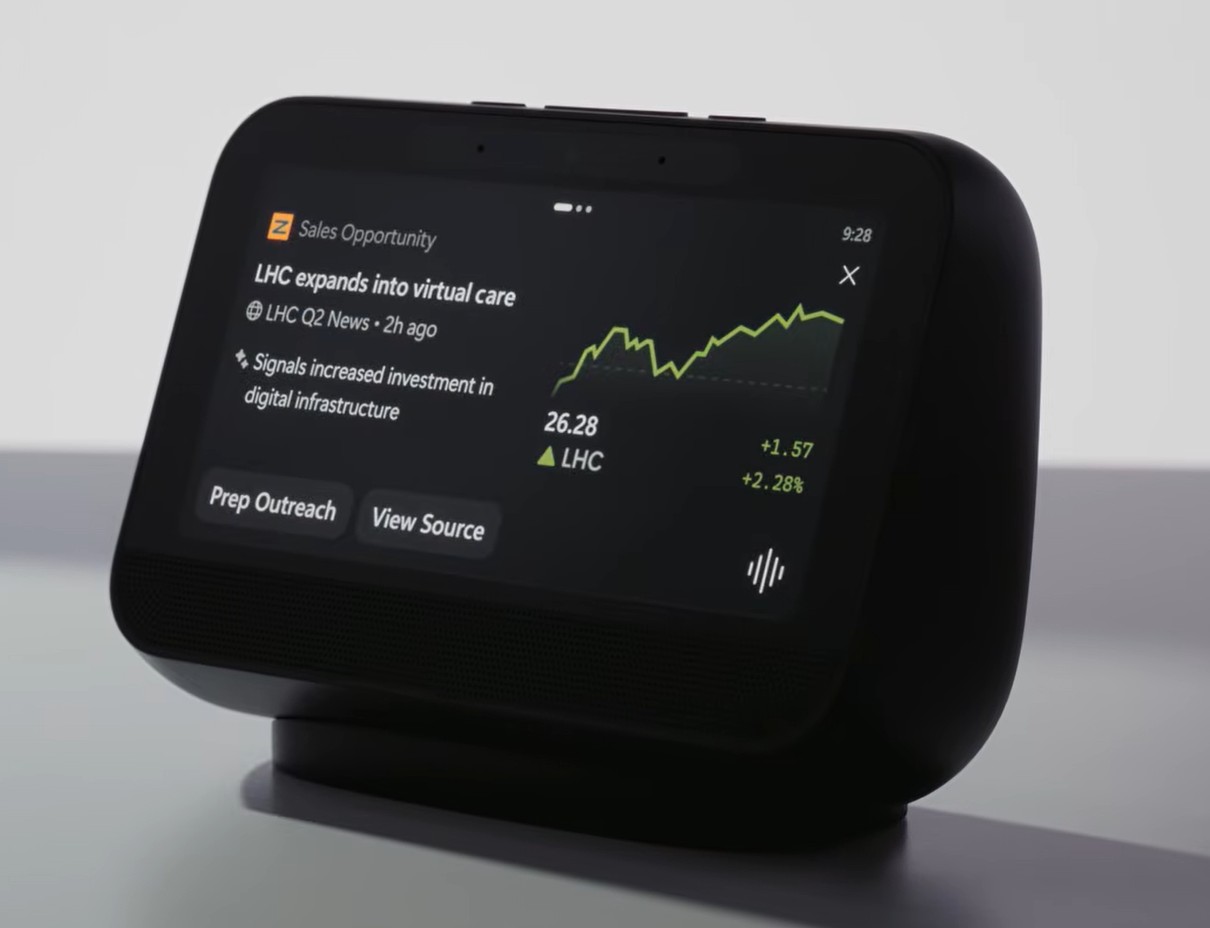
Desktop concept device. Source: Microsoft “Introducing Project Solara” Video
At this year’s Microsoft Build conference, the company unveiled a pair of new speech models that underscore how quickly the foundational technologies behind conversational AI continue to advance. Among the announcements were MAI-Transcribe-1.5, Microsoft’s latest speech-to-text model, and MAI-Voice-2, a new text-to-speech offering.
Microsoft says MAI-Transcribe-1.5 delivers improved speech recognition accuracy, while MAI-Voice-2 is designed to generate more natural and expressive synthetic speech. Both models reflect the industry’s continued push toward more human-like voice interactions.
The real test, however, will be how these models perform in enterprise environments. Contact center recordings, for example, are notoriously messy. Background noise, industry jargon, and heavy accents can quickly expose weaknesses that don’t appear in controlled evaluations. Still, Microsoft’s continued investments in its own speech technologies shows that it sees voice as a strategic component of the next generation of AI experiences.
Project Solara: Revisiting the Dream of Ambient AI
Microsoft’s ambitions extend well beyond speech. Build also introduced Project Solara, a platform designed for what Microsoft calls “agent-first devices.”
Instead of opening applications and navigating menus, users interact with an AI agent that remains continuously available. Voice, context, and enterprise identity are woven together into a more persistent experience.
The idea itself isn’t new. The technology industry has spent decades chasing the vision of a ubiquitous digital assistant. Smart speakers were perhaps the most visible attempt. Devices like Amazon Echo promised a future where people would naturally converse with technology throughout the day. But that future never fully arrived.
Agent-First Physical Devices
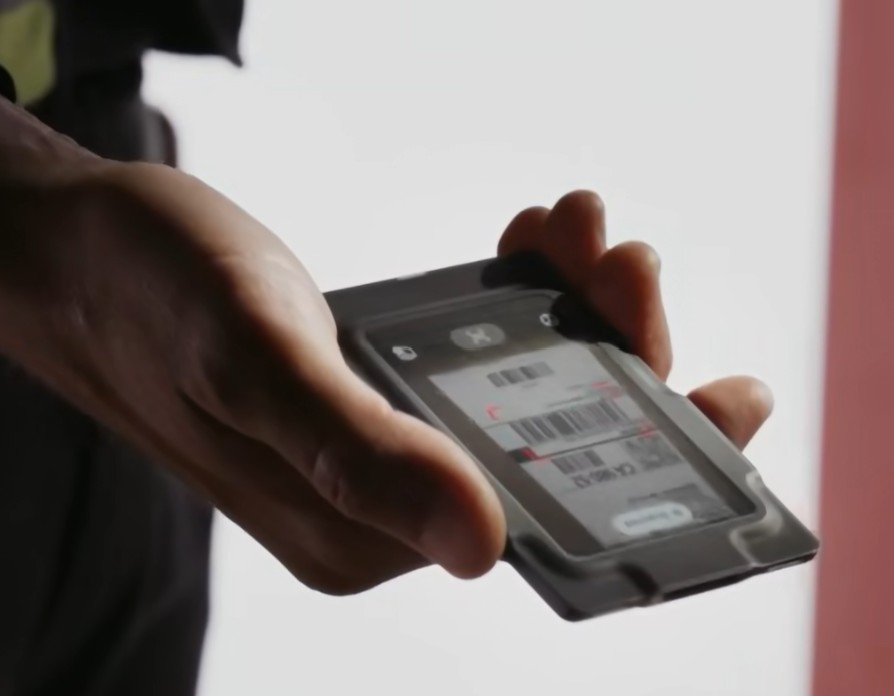
Badge concept device. Source: Microsoft “Introducing Project Solara” Video
To illustrate their agent-first vision, Microsoft showcased two concept devices built on top of the Solara platform. One was a desktop-oriented device designed to act as a persistent AI companion. The other was a wearable badge intended for frontline workers.
Rather than pulling out a phone or launching an application, users would simply interact with AI through natural conversation. A field technician might ask for guidance while repairing equipment and use the device’s camera to share images in real-time. A retail employee could retrieve product information while helping a customer. In each case, AI becomes part of the environment rather than a destination users must actively visit.
A question worth watching is whether agent-first devices will increase ecosystem dependence. Microsoft’s vision appears closely tied to assets such as Microsoft 365, Copilot, Azure, and Entra ID, suggesting these devices may be most compelling for organizations already invested in the Microsoft stack. At the same time, Microsoft has emphasized interoperability and multi-agent architectures, so it remains unclear how open the Solara ecosystem will ultimately become.
Maybe the Timing Was Wrong
Whether Solara and Microsoft’s vision for agent-first devices ultimately succeed remains to be seen. Organizations will have questions about privacy, security, and user acceptance. History also reminds us that many promising hardware concepts never move beyond the prototype stage.
Microsoft is hardly the only company pursuing the ambient AI vision. Consumer-focused devices such as Humane’s AI Pin and Rabbit’s R1 attempted to make AI a more persistent part of everyday life, though neither gained significant traction. OpenAI has long signaled future AI hardware, but no product has yet emerged. While Microsoft’s concepts are aimed more squarely at enterprise use cases, success in the broader category of agent-first devices remains largely unproven.
Yet the larger story may not be the devices themselves. Speech recognition continues to improve. Synthetic voices sound increasingly natural. Agentic systems are becoming more capable every year. The pieces that once existed separately are gradually coming together.
Perhaps the dream of a pervasive AI assistant didn’t fail because people weren’t interested, but because the technology stack wasn’t mature enough to fully deliver on the promise. The industry may soon find out whether the era of ambient AI has finally arrived.
Categories: Articles
 Agentic Commerce Is Starting to Leave a Trail
  Five9’s “Humantic” Bet Is Really a Bet on Conversations
  Who Does Your Personal Agent Work For?
  Salesforce’s Fin Acquisition Expands Its CX Ambitions Beyond Agentforce