
 For years, CCaaS vendors have enjoyed a privileged position in the enterprise. They sit on the conversation stream. They see what customers ask for, what frustrates them, and what it takes to make a problem go away. In essence, CCaaS controls the moment of truth when a customer is waiting and something has to happen now.
In the agentic era, that advantage still matters, but it’s no longer enough on its own. The center of gravity is shifting from handling conversations efficiently toward completing work reliably. That is the real difference between customer service and customer operations. Customer service informs and reassures. Customer operations reaches further, changing the state of the business by issuing refunds, updating orders, rerouting shipments, and executing all the other actions required to fully close the loop.
Some vendors are already signaling this shift, positioning agentic workflow orchestration as execution across systems, not just better dialogue. So, what becomes the missing ingredient when an enterprise tries to move from talking to doing? And how can CCaaS vendors take advantage of this missing piece?
The SOP Problem Agents Make Impossible to Ignore
Enterprises have Standard Operating Procedures (SOPs), but not in a form that supports autonomy. Many are scattered across PDFs and intranet pages. Some are outdated or contradict each other. And a large portion of a business process’s critical caveats live only in people’s heads.
Up until now, humans have been the runtime. They interpret ambiguity, know when a policy can bend, and know which system is the system of record when two tools disagree. Agents can’t safely improvise in the same way. They’re not equipped to execute critical processes at scale, under audit, and certainly not in regulated environments.
A new pattern is emerging that calls for the packaging of institutional know-how into something agents can safely and readily execute. This is where CCaaS vendors have a chance to define a new product category.
Executable Playbooks
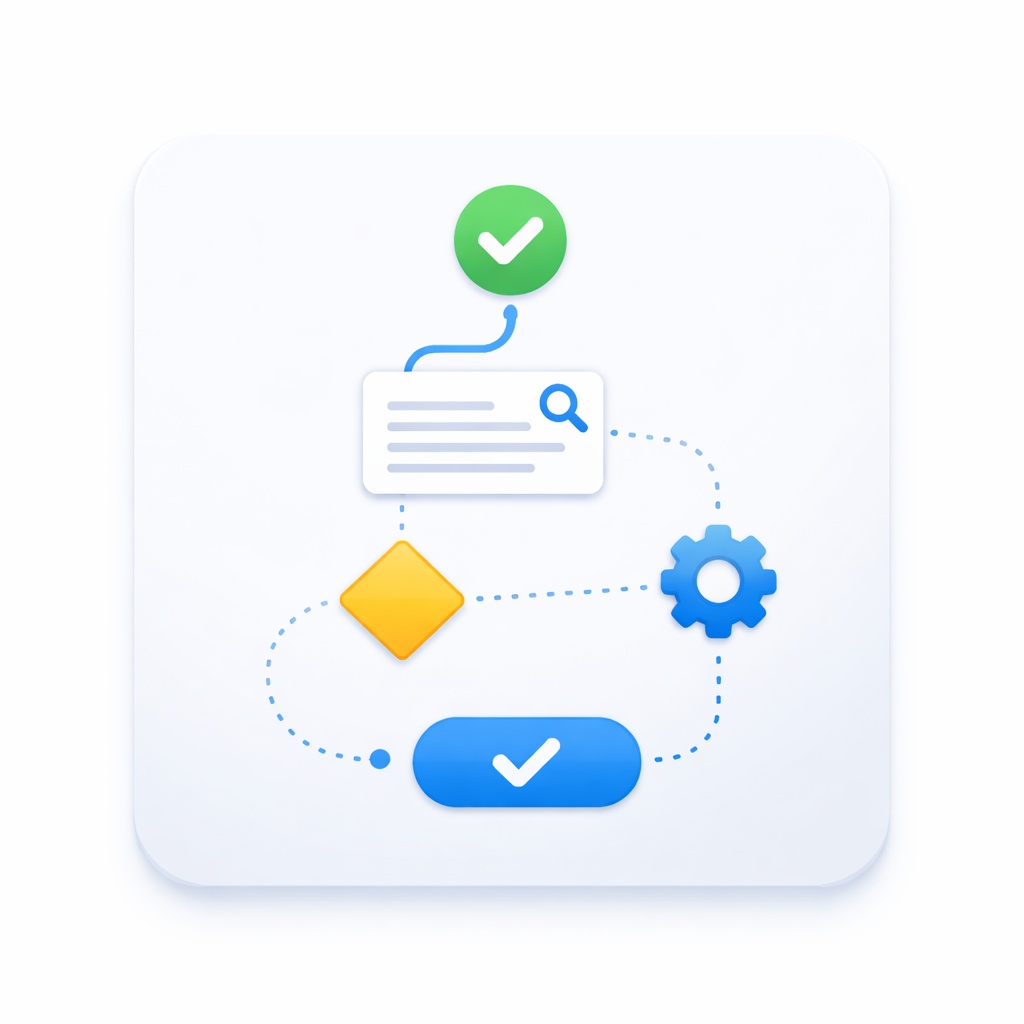
Knowledge management was built to help humans answer questions. Agentic operations require something closer to an executable playbook, consisting of a bundle of agent-interpretable instructions, tooling, governance, and tests that let an agent drive a workflow to completion within a monitored environment.
An executable playbook pulls together a versioned SOP with explicit policy boundaries. The playbook would include artifacts such as decision tables defining what is mandatory versus discretionary, tool bindings that maps steps to APIs, approval gates for high-risk moments, audit logging, a test suite preventing silent regressions, and monitoring for drift and failure modes.
For example, a refund-to-completion playbook would verify the customer, retrieve the order, evaluate eligibility against policy and region, check risk signals, determine whether the refund is full, partial, or denied, trigger supervisor approval above a threshold, execute in the billing system, update CRM and case notes, notify the customer with compliant language, and log every step for audit. It would likely combine both deterministic and generative components.
The success metric here is not containment or handle time, but rather completed outcomes with traceability. And once you can do refund to completion reliably, you can do dozens of adjacent workflows.
Why CCaaS Is Uniquely Positioned
Plenty of enterprise platforms can orchestrate workflows. Yet very few sit on the richest demand signal in the business. The contact center does, because it owns the conversation stream that tells the business what work needs to be done.
Conversation transcripts are a treasure trove of valuable insights. They show what actions succeeded and what failed, such as where policies are too strict or too loose. Repeat contacts expose where workflows broke downstream and need to be amended. This conversational telemetry can feed the generation and maintenance of agent-ready executable playbooks at a speed enterprises cannot match manually. CCaaS vendors already provide tools that enable business to mining transcripts for SOP steps, detecting drift when humans deviate from documented process, spotting where exceptions cluster, and identifying which workflows are stable enough for higher autonomy.
CCaaS can become the control plane for customer operations, not just the front door for customer conversations. These playbooks should live wherever they can be governed like production assets, with version control, approvals, and audit trails spanning CX, finance, risk, and IT. A CCaaS platform can be an excellent runtime and authoring environment, but most enterprises will want a portable system of record integrated with broader change management. The winning approach is a hybrid where CCaaS executes and observes, while the enterprise retains durable ownership of the playbook lifecycle.
The Opportunity Is Real, but the Bar Is Higher
Enterprises are going to hear plenty of agent promises. The vendors that win will be the ones that operationalize trust. That means executable and governable playbooks, permissions enforcing least privilege, audit trails that hold up in front of compliance teams, continuous evaluation so model updates don’t quietly change outcomes, and observability that makes autonomy safe enough to expand.
The agentic era won’t be won on orchestration alone. Orchestration without operational substance is just plumbing with nothing to move through it. The vendors that win will be the ones packaging real process knowledge into something agents can actually execute.
Categories: Articles
 When Your Customer Sends an Agent
  Opus Research Report: Agentic Commerce, A 15-Year View of a 2-Year-Old Category
  NiCE Delivered on Cognigy. Now Comes the Hard Part.
  The New Economics of Agentic Voice AI: The True Cost Per Resolution