
Imagine your air conditioner gives up the ghost in the middle of a heat wave. You search Google for a local HVAC company, but you’re not sure whether you need a repair or a replacement. Rather than clicking through to a website, filling out a form, and waiting for someone to call you back, you tap a message button in the search results. An AI agent asks a few questions, checks whether the company serves your area, and helps you schedule a technician. All without leaving the messaging app on your phone.
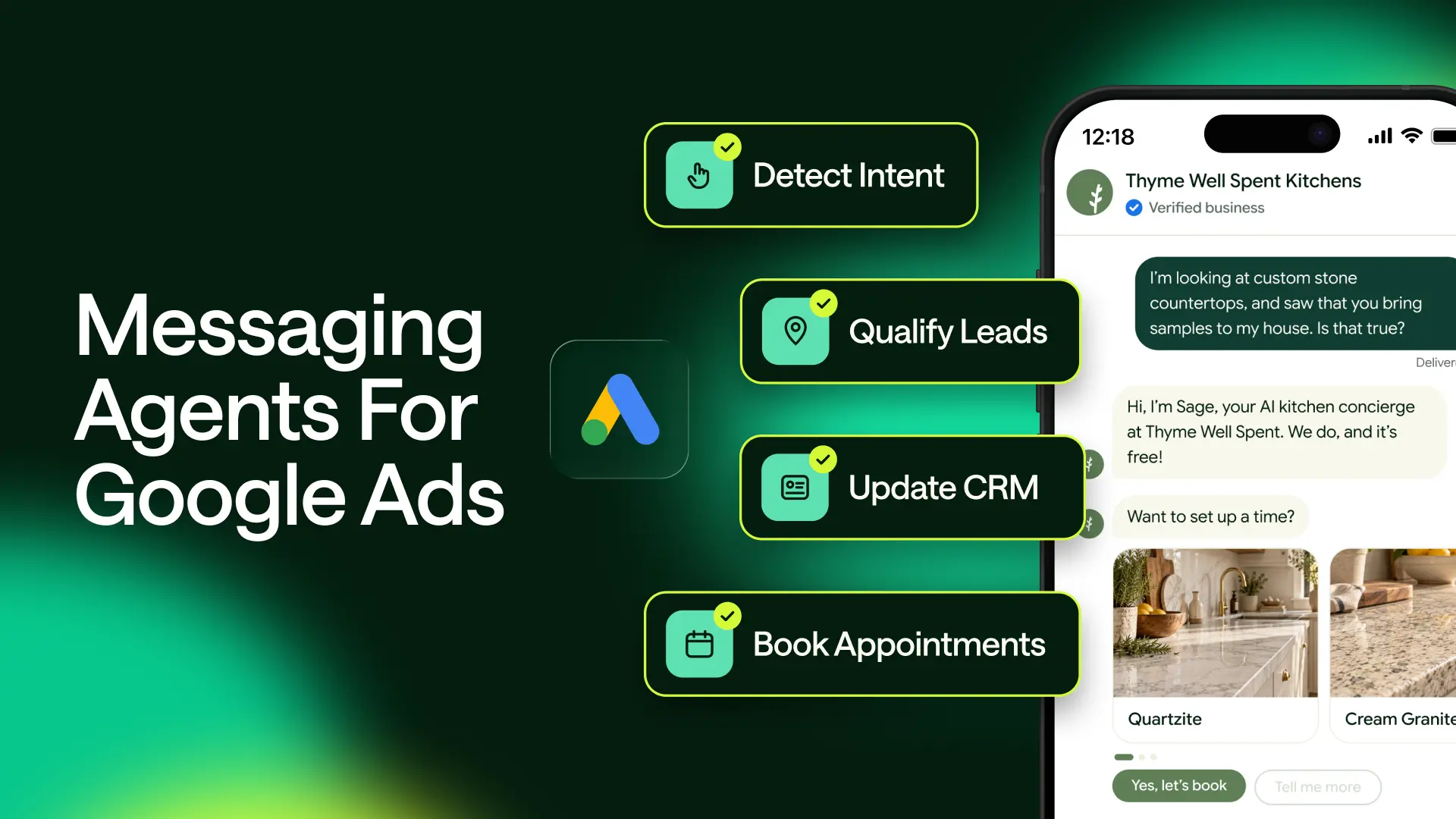
That’s the experience Invoca is aiming to deliver with its newly announced Messaging Agents for Google Ads, developed in collaboration with Google’s Ads and RCS for Business teams. RCS (Rich Communication Services) enables branded, verified conversations with interactive elements such as product images, suggested replies, and appointment booking. Consumers can initiate these conversations through Google search ads and organic search results, while Invoca’s AI agents handle qualification, sales inquiries, and handoffs to humans when needed.
Invoca has been steadily expanding its role from analyzing customer conversations to using that intelligence to shape, and now conduct, revenue-generating interactions. A few years ago, Opus Research examined its Signal AI Studio, which used generative AI to uncover customer intent and conversion outcomes from conversations. A year later, we looked at PreSense, which brings digital journey context into sales calls to improve routing and conversion rates.
The new offering takes another step, putting an AI agent directly into the customer’s buying journey. Invoca can also connect the initial Google interaction to subsequent appointments and sales, feeding revenue outcomes back into Google’s advertising systems. That’s an intriguing combination of conversational AI, conversation intelligence, and marketing attribution.
A Brand Agent at Someone Else’s Front Door
In our recent report, Agentic Commerce: A 15-Year View of a 2-Year-Old Category, Opus explored how brands risk losing control of customer relationships as AI-powered platform assistants and personal agents increasingly become the starting point for shopping. When those intermediaries control discovery and recommendations, brands can lose access to valuable customer context, attribution, and opportunities to build loyalty.
Invoca offers an interesting counterstrategy. When a consumer selects a messaging option in Google Search, Invoca’s AI agent takes over the conversation on behalf of the advertiser. It can answer questions about the brand’s products and services, qualify the prospective customer, and book appointments. The brand gains a direct, persistent RCS conversation with that consumer, even though the initial discovery happened on Google’s turf.
Of course, Google still controls the front door, including which ads appear. But Invoca is giving brands a way to retain more of the customer relationship once someone walks through it.
Marketing and Service Need the Same Context
Invoca approaches conversational AI from the revenue side, while most of the vendors Opus Research follows have historically focused on customer service. But the underlying technologies and requirements are increasingly similar. Both need access to customer context, business systems, and conversational intelligence to guide interactions toward successful outcomes.
Consider a customer who uses Invoca’s messaging agent to explore a new telecom plan, signs up, and then contacts customer service about a billing problem. Will the service agent know what the customer was promised during the sales conversation? Will it have access to the customer’s preferences and the original offer?
These are the kinds of challenges behind Opus Research’s concept of Conversational Experience Orchestration (CXO), which coordinates self-service, human assistance, and agentic automation across the customer journey. Invoca already has capabilities to connect interactions and share context with other vendors’ agents. But unless that context survives the handoff from marketing to sales to service, the brand risks spending money acquiring a customer only to undermine that investment through a disconnected experience. A successful conversion shouldn’t be where orchestration ends.
Beyond Attribution to Accountability
Over the years, Invoca built a strong story around connecting advertising investments to actual revenue. But as enterprises deploy AI agents from multiple vendors, knowing which agent contributed to a sale is only part of the challenge. Who ensures those agents follow consistent policies, access the right information, and operate within their assigned authority?
These are questions at the heart of Opus Research’s work on AI agent control planes. Invoca’s ability to share conversational context with other vendors’ agents is a promising start. But enterprises will increasingly need a governance layer that can evaluate and control agent behavior across platforms, including those they don’t own. So, the next frontier for Invoca and its customers may be moving from measuring what AI agents accomplish to governing how they accomplish it.
Categories: Conversational Intelligence, Articles
 Dialpad and Ada Combine to Build a Platform for Customer Work
 Zoom’s Unified Context Layer Could Connect a Lot of CX Dots
 Opus Research Report: Agentic Commerce, A 15-Year View of a 2-Year-Old Category
 NiCE Delivered on Cognigy. Now Comes the Hard Part.